
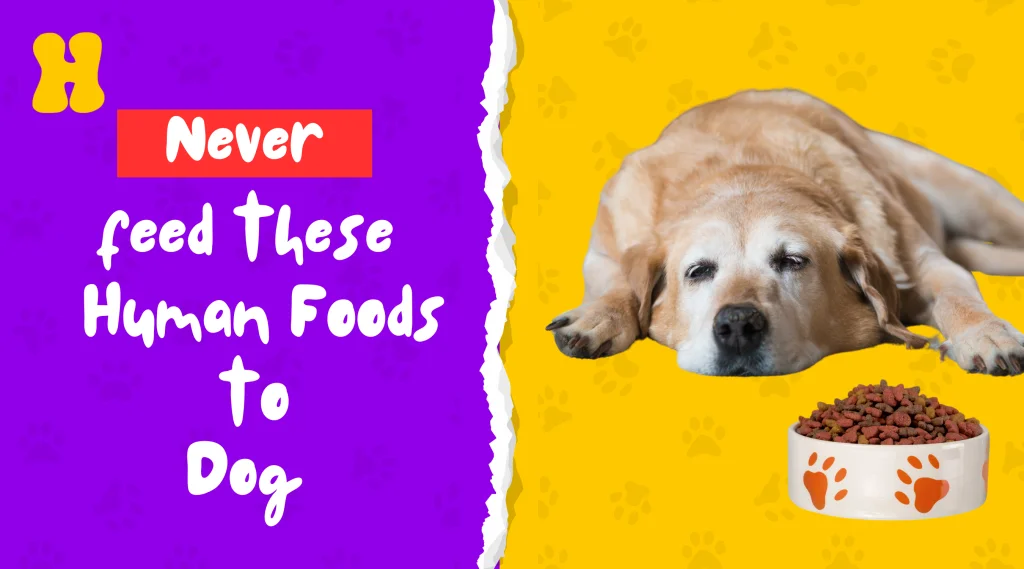
It’s hard to ignore a pet while we are seated with a bowl of food. Their innocent eyes ask more than their body language. Even our hearts won’t wait for long to share with them, but what if the sharing costs the life of your lovely pet?
It sounds harsh, but the reality is many dog owners unknowingly feed their pets toxic food that can cause serious health issues. Infact, not all human foods are dog-friendly and can’t be shared with them– some ingredients lead to vomiting, diarrhea, poisoning, or even death.
This article aims to give detailed insights to those pet owners who have a habit of sharing human foods, and are unaware of what to feed or not and offer safe alternatives.
Table of Contents
Why Certain Foods Are Dangerous for Dogs
But before, for those who are curious about how human food can be dangerous for their pets because we totally become harsh for pointing it out. So, the reason is obvious– dogs have a different digestive system from humans, making some ingredients hard to process, and negatively react even if it’s a healthy benefit for humans. Dogs lack the necessary enzymes to break some ingredients leading to difficulty in digestion.
Similarly, some toxins potentially damage their organs, leading to long-term health complications. That’s why it’s better to be aware of those toxic foods for dogs to prevent medical emergencies, and ensure healthy and stress-free parenting.
Avocado
While avocados are a healthy snack for humans, there is something substance named as “persin”, which is toxic to your dog. This substance can cause vomiting and diarrhea.
When you feed avocado to your pet, it might trigger fluid accumulation in the chest and lungs, which leads to stressful breathing and even death due to oxygen deprivation.
Chocolate & Caffeine
Human chocolate contains theobromine and caffeine ingredients, both of which are responsible for negatively affecting a dog’s nervous system and heart function. Since dogs metabolize theobromine very ineffectively, a small amount of them can trigger their health. Whether it’s dark or white chocolate, both are equally harmful for dogs.
Symptoms of chocolate poisoning:
- Vomiting and diarrhea
- Rapid heart rate
- Restlessness and hyperactivity
- Muscle tremors or seizures
- In several cases, coma or death
Safe Alternatives:
Pet owners can consider offering peanut butter or specially formulated dog treats instead of chocolates, that satisfy their sweet tooth without harmful effects.
Grapes and raisins
It’s still unknown which grapes and raisins are toxic for dogs, but studies confirm that even a small amount can cause acute kidney failure in dogs.
Symptoms:
- Vomiting within a few hours
- Loss of appetite
- Lethargy and weakness
- Increased thirst and urination
- Kidney failure, which can be fatal
Safe Alternatives:
Instead of grapes, give your dog blueberries, apples (without seeds), or bananas as healthy treats.
Onions and Garlic
Onions and garlic, both raw, cooked, powdered, or in seasoning, can harm the pet’s red blood cells, leading to anemia. The ingredients thiosulfates are responsible for this cause.
Symptoms of Onions and Garlic Poisoning:
- Weakness and lethargy
- Pale gums
- Vomiting and diarrhea
- Difficulty breathing
- Collapse (in severe cases)
Replace onions and garlic with pumpkin, carrots, or parsley, which are safe and nutritious for dogs.
Xylitol
Xylitol, also known as artificial sweetener, is mostly found in sugar-free gums, candies, and even some peanut butter brands. It can cause a rapid release of insulin in dogs, leading to dangerously low blood sugar levels. Within 30 minutes of ingestion, a negative impact can be seen, which requires immediate veterinary treatment.
Symptoms of Xyliton Poisoning:
- Vomiting
- Weakness and confusion
- Seizures
- Coma or sudden death
Use natural peanut butter ( xylitol-free) and honey as safe sweeteners for homemade dog treats.
Alcohol & Raw Dough
Dogs are highly sensitive to ethanol (alcohol) found in alcoholic drinks and fermenting yeast in raw dough. Even small amounts can lead to toxicity, intoxication, coma, or death.
Symptoms of Alcohol Poisoning:
- Vomiting
- Disorientation and dizziness
- Loss of coordination
- Slow heart rate and breathing difficulties
Safe Alternatives:
Instead of alcohol, offer bone broth or dog-friendly drinks like coconut water for hydration.
Other Dangerous Foods
Raw meat, eggs, and bones
Sometimes, there is a promotion of raw diets on pets, there is contamination of harmful bacteria like salmonella or E.coli in the raw meat and eggs. Raw bones may splinter which can cause choking and damage to your pet’s digestive tract.
Mushroom
Like for humans, not every mushroom is considered safe for pets, especially wild ones. Certain types contain toxins that can lead to severe health issues such as vomiting, diarrhea, abdominal pain, liver damage, or even neurological problems like seizures. Since it’s hard to identify which mushrooms are safe, it’s best to keep your pet away from all mushrooms, whether wild or store-bought.
Dairy product
Although some pets may love the taste of milk, cheese, or ice cream, while others are lactose intolerant. This lactose may not be breakable by digestive systems since it lacks enzymes, which may lead to stomach upset, bloating, gas, or diarrhea. Even if your pet doesn’t show immediate symptoms, consuming dairy regularly can lead to long-term digestive discomfort or food allergies. Instead, opt for lactose-free pet-safe alternatives.
Sugary foods and drink
Feeding pets sugary foods like candies, cakes, or soda can lead to obesity, diabetes, and dental problems. Sugar adds empty calories and has no nutritional value for pets. Moreover, some sugary treats might contain xylitol, an artificial sweetener that’s highly toxic to dogs. Symptoms of sugar or xylitol consumption include vomiting, tremors, or even life-threatening conditions like liver failure. Always check ingredient labels before offering snacks to your pets.
Almonds
It’s surprising to learn that almonds shouldn’t be eaten by the dog. Although these nuts are not harmful to dogs like macadamia nuts, consumption of these nuts could be as dangerous as them. It’s because they could block the esophagus of the dog, and develop the problem in the windpipe if it isn’t chewed properly. Also, these nuts could increase the water retention ratio, which potentially risks heart disease.
What to Do If Your Dog Eats a Toxic Ingredient
- Stay Calm – Remove the food immediately.
- Identify the Toxin – Check ingredient labels and estimate how much was consumed.
- Call a Veterinarian – Seek professional advice, even if your dog seems fine.
- Do NOT Induce Vomiting – Unless directed by a vet, inducing vomiting can worsen certain poisonings.
- Monitor Symptoms – Keep an eye on your dog for at least 24 hours.
Conclusion
Not every human’s food is safe for dogs. It’s better to take prevention and stop feeding those harmful foods that potentially harm dogs’ health. Always read ingredient labels and consult a vet before introducing new foods to your diet. By following these guidelines, you can keep your pet healthy, prevent poisoning, and ensure a long, happy life for your furry friends.
You can consider getting dog-friendly foods and treats from our store Hugsypetsnepal, which offers premium dog-healthy foods.
FAQ
What should I do if my dog accidentally eats chocolate?
Contact your vet right away. The severity of symptoms varies with the type and amount of chocolate taken, although even small amounts can be dangerous to dogs.
Can dogs eat peanut butter?
Yes, dogs can consume peanut butter, but it must not contain xylitol, an artificial sweetener that is poisonous and potentially fatal to dogs.
How can I prevent my dog from eating toxic foods?
Keep risky items out of reach, teach your dog the “leave it” command, and educate family members on which foods are safe and which are not for dogs.
Are all dairy products harmful to dogs?
Although not all dogs are lactose intolerant, many of them are. While tiny amounts of cheese or yogurt may be acceptable to certain dogs, dairy can cause digestive problems in the majority of them.


