
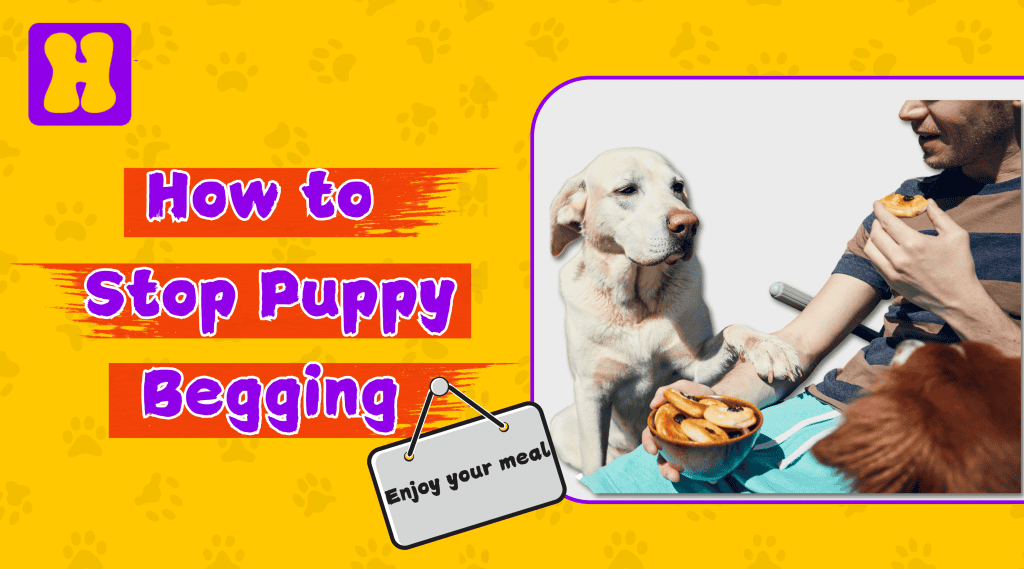
How many times have you fallen into puppy dog eyes when you’re about to sit down to enjoy your favorite meal? It’s hard to resist puppy begging, though!
As a pet owner, we might have to go through unwanted growling, whimpering, barking, and even big sad puppy dog eyes whenever we sit with a meal plate and have to end with sharing with our lovely dog. This seems common unless human food harms their health.
Sharing excess human food may cause dog health issues such as obesity and other serious long-term illnesses. Food that contains high-fat levels may hamper the health condition of dogs.
Actually, ending with sharing food can be related to the fact that we are negatively reinforcing our puppies for promoting begging behavior. Although, we try to stop puppy begging by giving food from the plate, but ends with shaping the “begging gives what we want” concept in puppies.
But,
Table of Contents
What is “Puppy Begging” and Why Do Puppy Beg For Food?
Begging is when a dog uses specific body language or behaviors like sitting near the dinner table, staring intently, whining, or pawing to request food or attention. It can be explained as a kind of communication form where they’re signaling a desire for something you have.
Dogs are more inclined towards delicious food, especially those with good smells and taste. With the natural gift of smelling sense, they always want to figure out what we’re eating without actually sharing it…, and, in the end, they just want to get something in their mouths.
Since dogs are intelligent, they know what actually works better for humans to melt their hearts, so that they end up completing their puppy desire. For instance, making big puppy dog eyes does magic to share a human food, even a big insisted by the owners. If it does not work, they can quickly figure out what other act can do the same magic such as looking long in a person or whining or pawing. Doing so, an owner may find it cute and end up sharing a piece of food.
By the way, puppy begging is a natural instinct, but unintentionally many owners encourage begging over time. Giving a dog table scraps or feeding them while they beg reinforces the idea that begging gets results. It’s kind of adjustable if they only beg with you, but may not others, especially children or vulnerable adults, or guests who are not pet lovers.
That’s the reason why we should address this begging behavior from an early age. Fortunately, there are some techniques to:
Stop Dog Begging
Every time you share table scraps or feed them, it will promote begging behavior which other family members or guests may find uneasy. With enough getting their desired things by just begging, they become better at it and use their expertise every time they see someone seated for eating.
If their begging is polite, it may not be so problematic. Polite begging means that a dog sits near a table and starts staring at the person for a long, but if they’re a bit pushier, nuzzling their hand with their paws or even worse, jumping on the table just to get some food. What will be the impression on guests if your dog does this behavior?
So, if you’ve begging puppies, start these steps to end these behaviors.
Set Clear Boundaries
One of the most effective ways to manage begging is by establishing clear boundaries. Puppies’ learning capacity is way high (especially at 5-9 months), and they quickly learn behavior patterns.
So, you can start by implementing a “no table scraps” rule in your household, which ensures that no one feeds the dog from the dining table. By doing this, you can eliminate the association between begging and receiving food.
Also, consistency is critical in the process of setting boundaries. If any member gives in, it can undo the progress made by others.
Additionally, it is essential to avoid giving any form of attention, such as scolding or eye contact, when your puppy begs as even a negative reaction can be perceived as a reward.
Feed Your Puppy Before Your Meals
If a puppy has a full stomach, their begging gets control at some level. Feeding them first ensures they’re not driven by hunger while you eat. This is a simple technique, but a result-oriented to prevent begging behavior.
Pet trainer believes feeding them in a separate room makes more easier to redirect them to stop this unethical behavior. This helps to associate their eating place as separate from ours, and may not be disturbed while enjoying your favorite meal.
Create Distractions During Meals
Providing alternative things such as toys, chewing items or any things that your puppy finds interesting can keep them distracted during your meals. Not only this, but it helps to creates a positive association with being away from the dining table.
For this, a commonly used method is Kong toys filled with peanut butter.
Ignoring Their Beg
It’s effective to ignore puppies when they beg. This will help to associate them with the idea that begging isn’t a way to get anything they ask for.
Ignore their whine, bark, or big puppy dog eyes and continue what you’re doing without giving them attention until you complete it. If their behavior is improving with your ignorance, you can reward that unbegged behavior with treats, but after your work is finished.
By doing this, they will learn that human meals are not going to be accessed with a beg.
FAQ
1. Why Does My Puppy Beg for Food?
Puppies beg for food because they’ve learned that food is a reward, and they may like mealtimes with the chance to get an opportunity for eat. It’s also natural for them to be curious about what you’re eating.
2. How Do I Stop Puppy Begging?
Avoid offering your dog food from the table on a regular basis to prevent begging. Teach them to eat in a certain location, such a bed or box, and give them a treat if they remain there.
3. Is It Bad to Give My Puppy Food When They Beg?
It is true that giving your dog food when they beg helps to encourage the behavior. They will eventually discover that begging gives them food, which exacerbates the issue.
4. How Can I Train My Puppy Not to Beg for Food?
During mealtimes, teach your puppy commands like “stay” or “go to your spot.” When they obey, give them praise or goodies, but don’t let them eat from your plate.
5. Why Does My Puppy Beg Even After They’ve Been Fed?
Begging may be motivated more by habit or attention-seeking than by true hunger. Even when they are full, puppies may beg because they are looking for attention or a reward.
Conclusion
Keeping your puppy from begging needs patience, perseverance, and a proactive strategy. Setting clear boundaries, feeding your dog before meals, generating distractions, and ignoring begging behavior are all good ways to prevent this practice.
Remember that begging is a normal instinct, but reinforcing it can result in undesired behavior that is difficult to regulate over time. You can educate your puppy to respect mealtime boundaries if you provide them with the right training, consistent discipline, and positive reinforcement.
This promotes a more respectful and healthy relationship with your pet in addition to ensuring a more relaxing dining experience.


